

Clinical development PMOs rarely suffer from a lack of information. Every program generates plans, trackers, dashboards, meeting notes and status updates.

The problem is that these inputs often fail to provide a reliable, portfolio-level view of what is changing, why it matters and where action is required.
A program may appear “green” in a weekly report while its resource assumptions are already becoming unrealistic. A milestone may remain unchanged even though a dependency has slipped. A functional team may look adequately staffed at the enterprise level while facing a critical capacity gap during a specific phase of execution.
More reporting does not resolve these issues. Clinical development PMOs need connected portfolio visibility that turns plans and operational signals into decisions.
Status Reporting Explains the Past
Traditional status reporting is designed to answer questions such as:
- What was completed?
- Which milestones are on track?
- What issues were raised?
- What changed since the previous review?
These questions are necessary, but they are retrospective. They describe the current state without necessarily revealing what is likely to happen next.
Clinical development portfolios are continuously affected by shifting enrolment assumptions, regulatory interactions, protocol amendments, vendor performance, country activation timelines and changes in study design. Each change can have consequences for resources, budgets, dependencies and downstream milestones.
When these effects are assessed manually across disconnected spreadsheets and systems, the PMO receives a fragmented picture. By the time the impact becomes visible in a status report, the window for an effective response may already be narrowing.
Portfolio Visibility Connects Change to Consequence
True portfolio visibility goes beyond consolidating project updates. It establishes a line of sight from operational change to portfolio impact.
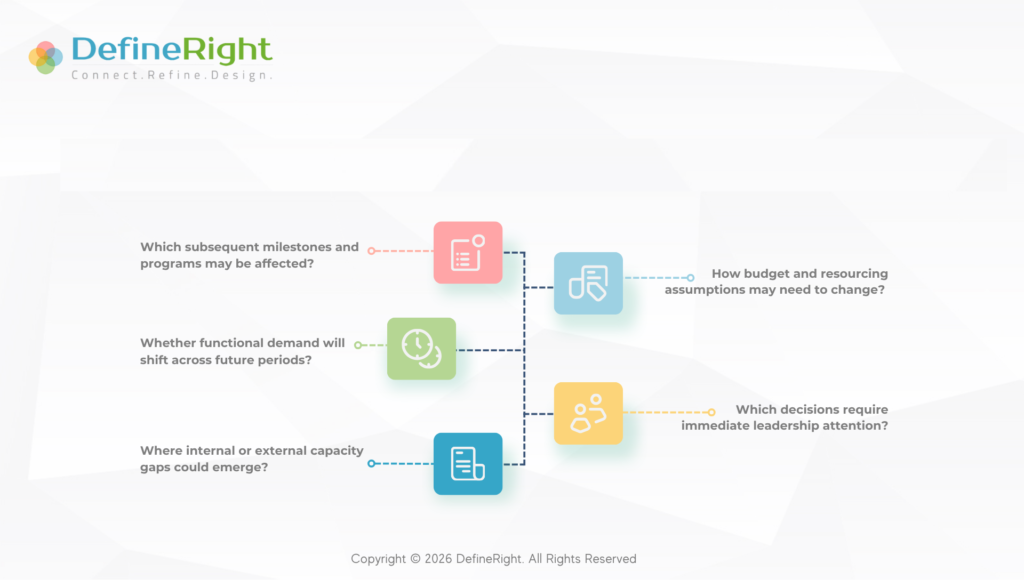
This is what transforms the PMO from a reporting function into a decision-enablement function.
Instead of spending review meetings reconciling data or debating which version of a plan is current, leaders can focus on the implications of change and the choices available to them.
Resource Visibility Is Central to Portfolio Control
Portfolio execution ultimately depends on whether the right capabilities are available at the right time.
Yet many organizations manage milestone plans and resource plans separately. Study teams maintain schedules, functions forecast headcount, finance tracks budgets and vendors manage their own delivery commitments. The connections between these plans are often weak or dependent on manual interpretation.
This creates several risks:
- Resource constraints surface only after timelines are affected
- Demand peaks remain hidden within annual averages
- Competing programs make overlapping claims on specialist capacity
- External support is initiated too late
- Teams continue working against outdated assumptions
Portfolio visibility should therefore connect program plans with functional resource demand. The PMO needs to see not only whether a milestone is at risk, but also whether the portfolio has the capacity to deliver the underlying work.
The PMO Needs Foresight, Not Just a Single View
A consolidated dashboard is useful, but visibility should not stop at presenting one version of the plan.
Clinical development leaders need to examine plausible scenarios before committing to a course of action. What happens if enrolment takes longer than expected? What if a program is accelerated? What resources would be required if an additional indication enters the portfolio? Where could work be sequenced without creating new bottlenecks?
Scenario-based planning allows the PMO to compare alternatives and understand their implications across timelines, functions and programs. It moves portfolio management from static oversight to active orchestration.
The objective is not to predict every development with certainty. It is to identify pressure points early enough to preserve options.
AlineRight Brings Plans, Resources and Decisions Together
AlineRight from DefineRight is designed to support this need for connected portfolio and resource visibility.
It helps clinical development organizations translate portfolio plans into actionable resource decisions by bringing together demand assumptions, available capacity, timelines and scenarios. Rather than replacing existing planning systems, AlineRight can work across the technology landscape to create a more decision-ready view of the portfolio.
With AlineRight, PMOs can:
- Connect portfolio milestones with resource demand
- Identify capacity gaps and competing priorities earlier
- Compare planning and execution scenarios
- Assess the impact of program changes across functions and time periods
- Support evidence-based discussions between development, functional and finance leaders
- Maintain alignment as portfolio assumptions evolve
This creates a common decision context without asking teams to produce another layer of status reporting.
From Reporting Activity to Decision Advantage
The value of a clinical development PMO should not be measured by the number of reports it produces. It should be measured by how effectively it helps the organization anticipate constraints, evaluate trade-offs and act before portfolio risks become execution problems.
Status reports remain useful but they are not a substitute for portfolio visibility.
By connecting plans, resources and scenarios, PMOs can shift their attention from explaining what has happened to shaping what happens next. That is where portfolio management creates real strategic value, and where solutions such as AlineRight can help turn complex development plans into confident, executable decisions.